
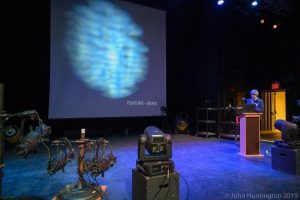
Lighting Designer Chip Scott (USA829) offers us insight into what the various types of moving lights have to offer. Spot, Profile, Performance, Wash, Hybrid, LED, Discharge, Additive, subtractive, flags, wheels, rotating, etc, what do all these terms mean, and why do you need to know them before you call your local rental shop for gear?
Moving lights are everywhere in modern productions, from school musicals to large-scale concerts, but the terminology can feel overwhelming. Spot, profile, performance, wash, hybrid, LED, discharge, additive color, subtractive color, flags, wheels, rotating gobos—the list goes on. This session is designed to decode the language of moving lights and give teachers a practical framework for understanding what each type of fixture can do.
The workshop starts by categorizing the main families of moving lights and clarifying what each is best suited for. Participants compare spot/profile fixtures, which excel at sharp beam control and gobos; wash units, which provide wide, soft coverage; and hybrid fixtures, which combine multiple functions in one housing. The session covers differences between LED and discharge light sources and explains how those differences affect color, output, power usage, and maintenance.
From there, the session introduces the internal mechanics that make moving lights so versatile: color wheels, gobo wheels, animation wheels, prisms, shutters, flags, and more. Participants learn how these features translate into real-world effects and how to prioritize what matters for a school production. The workshop closes with practical guidance on how to talk to rental shops, how to read spec sheets, and how to choose the right fixtures for your needs and budget. Teachers leave with a clearer sense of what to ask for and how to integrate moving lights into their existing lighting systems.