
Earn Act 48 Credit With Stage Seminars
Empower your students with real theatre technology skills while you earn Pennsylvania Act 48 professional development credit in lighting, sound, scenery, and rigging.
Why Act 48 with Stage Seminars?
Stage Seminars is recognized by the Pennsylvania Department of Education as an Act 48 provider, helping educators meet continuing education requirements through practical, hands-on workshops in technical theatre.
These sessions are designed for drama, music, choir, band, English, and CTE/STEM or STEAM teachers who know performance but want confidence in the design and technical side of productions. Workshops also support programs that align to NOCTI and other CTE credentials

Act 48 Workshop Offerings
Lighting Design Process
Discover how lighting designers turn ideas into visual storytelling. This course explores research, collaboration, and creativity—showing how light, color, and texture bring a production to life. Click here for more info and a link to Scott’s Lighting Design Process starter course from Stage Lighting Super Saturday.
Stage Lighting 101
This introductory session looks at the core goals of stage lighting and how light shapes what audiences see, feel, and understand. Learn the fundamental objectives of the lighting designer, visibility, environment, and storytelling, and how to begin applying them in school productions.
Lighting Design for Stage Productions
Learn to read and create light plots, build even washes and specials, select beam angles, patch and cable a show, work with DMX addressing, and operate a lighting console for plays and musicals.
Teaching Design to Students
Transform design skills into practical classroom projects for middle and high school students. Create student teams that can design and build sets, hang and focus lights, program cues, and run productions in a safe and professional manner.
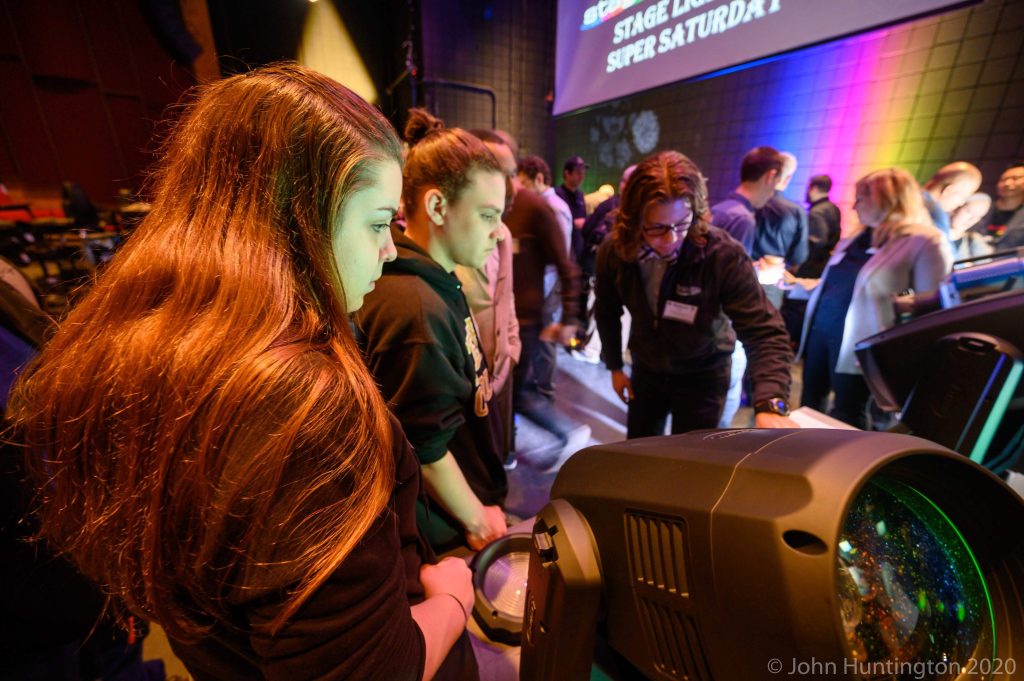
Gobos, Templates, and EFX from Conventional
Gobos, also called templates or patterns, are one of the simplest ways to add texture, mood, and storytelling to a stage picture without expensive moving lights. This session explores how to choose, use, and even create your own gobos with conventional fixtures, and how to bring scenes to life with patterns, rotators, and simple effects.
Moving Lights: What Are All These Different Types?
Moving lights can be intimidating until you understand what each type is designed to do. This session breaks down spots, profiles, performance fixtures, washes, hybrids, and more, along with terms like LED, discharge, additive and subtractive color, flags, and wheels, so you can speak confidently with rental houses and choose the right gear for your show and budget.
Mixing Color with LEDs and Movers
LED fixtures and moving lights have changed how color is mixed on stage, but not all fixtures or consoles behave the same. This session explores different approaches to color mixing, why colors can look different between brands and consoles, and how to get consistent, intentional color on your stage.
Lighting Fixtures: Conventional and LED
Not all lighting fixtures are the same, and understanding how each type functions is crucial for designing effective, efficient school productions. This session explores the optics and functions of standard and LED fixtures, ERS, Fresnels, cyc units, and more, so you can make informed decisions about gear, placement, and upgrades.
DMX: Wired and Wireless
DMX is the language your lighting console uses to talk to dimmers, LEDs, and moving lights, and it is not the same as audio cabling. This session explains what DMX is, how universes and addresses work, and how to use both wired and wireless DMX safely and reliably in school theatres.


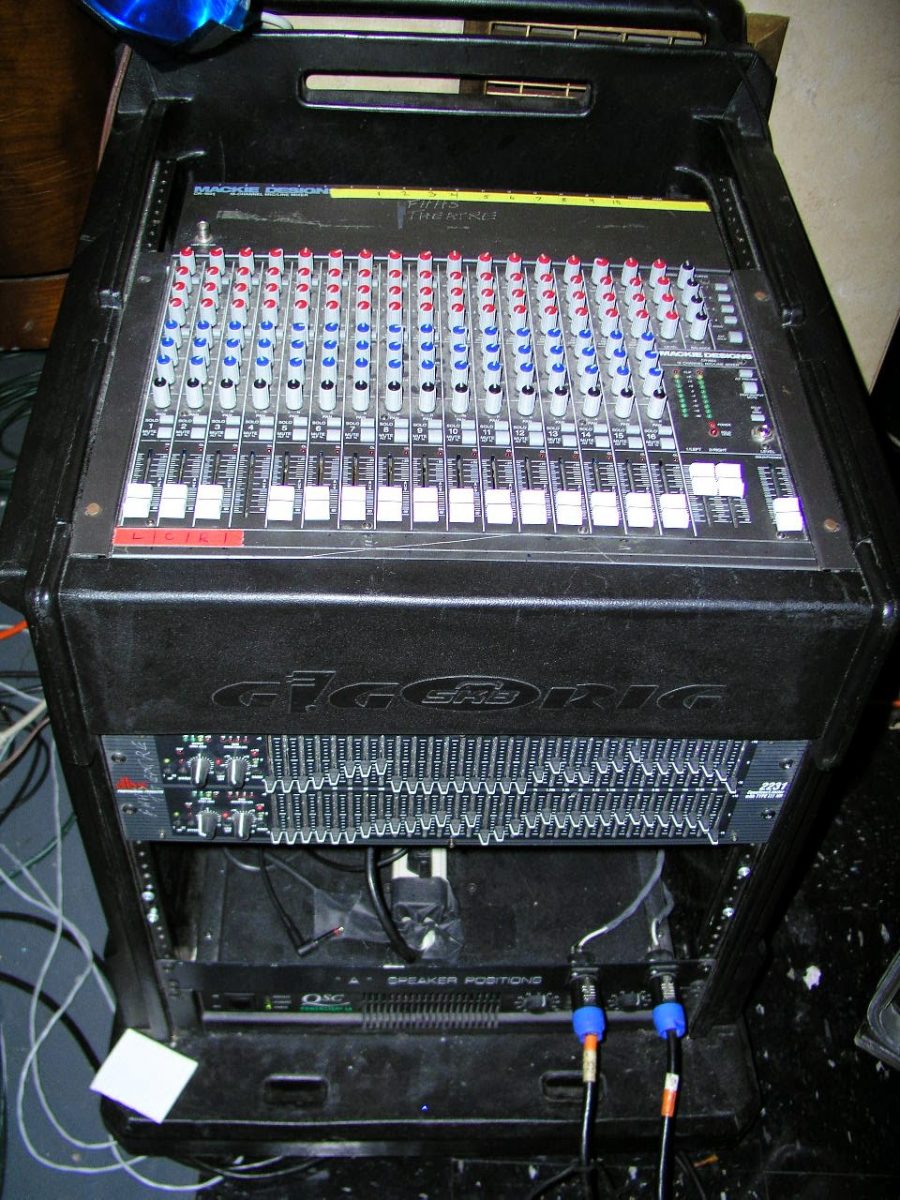
Audio and Sound for School Productions
Understand how mixers, amplifiers, and speakers work together, choose and place wired and wireless microphones, and run live shows so every student is heard clearly from the sound console. Click the button for more and an online intro class.
Stage Rigging Fundamentals
Explore how rigging systems work, apply basic load calculations, and create safe procedures so students can assist in planning and operating rigging for school productions. Scott is an ETCP Certified Rigger and a recognized trainer.

Scenic Design and Construction
Take designs from concept to construction through sketching and drafting ground plans, front elevations, and sections. Learn to build flats, platforms, and simple set pieces with safe practices.
Computer-Aided Design Featuring Vectorworks
This session introduces computer-aided design tools for theatre, with a focus on Vectorworks Spotlight and Lightwright. Learn how digital drafting supports light plots and paperwork, how CAD fits into a broader design process, and how to bridge the gap between hand drawing and computer-based workflows.
Built for CTE, STEM, and STEAM
Technical theatre naturally blends engineering, physics, math, and art, making it a strong fit for CTE and STEM/STEAM initiatives in Pennsylvania.
Use production work as a framework for measurable, standards-based skills that work with NOCTI exams and other CTE pathways where appropriate.
Each workshop includes guidance to additional resources and options for integrating NOCTI-aligned technical theatre skills into your curriculum.

Meet Your Instructor: Scott C. Parker
Scott produces the annual Stage Lighting Super Saturday workshop in New York City and is a recipient of the USITT Distinguished Achievement Award for Education, which recognizes his significant impact on training the next generation of theater technicians and designers. He is certified by the New York State Department of Education as a Stage and Set Design teacher, with a decade of experience in classroom teaching in New York City and an additional ten years teaching at the university level.
Scott is also an ETCP Certified Electrician and Theater Rigger, as well as a recognized ETCP trainer, incorporating nationally respected safety and technical standards into every workshop.
With over four decades of professional experience as a freelance designer and technical director, Scott has designed scenery, lighting, and sound for theatrical productions, corporate events, national conventions, and awards shows across the country. His teaching credits include institutions such as Edward R. Murrow High School, Berkeley Carroll School, Rutgers University, Temple University, the Johnny Carson School of Theatre and Film, and Pace University, among others. Scott remains actively engaged in the industry through memberships in USA829, ESTA, and EIS, ensuring that his teaching reflects current professional practices and standards.
How Act 48 Credit Works
Educators in Pennsylvania who hold an active certification are required to complete ongoing professional development, usually amounting to 180 hours or the equivalent, every five years, as mandated by Act 48.
As an approved provider, Stage Seminars will report your completed workshop hours to the Pennsylvania Department of Education’s PERMS system, ensuring they are reflected on your official Act 48 record. Always check with your school district or the Pennsylvania Department of Education to verify how specific hours relate to your role and professional goals.
Teachers from outside Pennsylvania are welcome to participate in Stage Seminars workshops. Upon completion, they will receive a detailed certificate that includes contact hours, workshop titles, dates, and content focus. This documentation can be submitted to their own state department of education or licensing agency for potential professional development credit, particularly when that state recognizes courses that qualify for Act 48 credit in Pennsylvania.
Many states allow out-of-state or online professional development to count toward local renewal requirements, provided that the training is offered by an approved provider in another state. However, each teacher is responsible for confirming the applicability of these credits with their own state, district, or licensing office in advance.
Stage Seminars will gladly provide clear records and workshop descriptions to assist teachers in this process. Ultimately, the final approval for credit is determined by the teacher’s home state.